For most South African homes on safe municipal water, a water filter jug is worth it if you want better-tasting drinking water for one or two people at the lowest upfront cost. If your household drinks and cooks with several litres of filtered water a day, an under-sink filter feeding its own filter tap is usually more convenient and needs far fewer cartridge changes. None of the three makes untreated borehole or rainwater safe to drink on its own.
All three treat the same thing: the water you drink and cook with, rather than every tap in the house. Where they differ is how much water they can handle, how much filter media they hold, how often the cartridge must be changed and whether anything has to be plumbed in. This guide compares them side by side and shows where each one stops being the right answer.
How a water filter jug works, and what it does not do
A filter jug is a pour-through filter. You fill the top reservoir from the tap and gravity draws the water through a small cartridge into the jug below. The cartridges in the common supermarket jugs combine activated carbon with an ion exchange resin. Brita, for example, says the carbon in its MAXTRA PRO cartridge reduces chlorine and other substances that affect taste, while the resin reduces carbonate hardness (the scale that builds up in kettles) and metals such as copper and lead.
That makes a jug good at the things most people notice first: the chlorine taste and smell of municipal water, and the white crust in the kettle. Its limits come from its size. The cartridge is small and the water passes through it quickly, so it can only hold so much before it is spent. Brita says its cartridges should be replaced at least every four weeks or after 150 litres, and that its filters are not designed to remove fluoride.
A few habits keep jug water fresh:
- Keep it cold. Filtering removes the chlorine that protects tap water from bacterial growth, so manufacturers advise keeping filtered water in the fridge and drinking it within a day.
- Change the cartridge on time. Once a cartridge is spent it stops reducing chlorine and scale, and the water drifts back towards plain tap water.
- Clean the jug. Wash the jug and reservoir regularly, as the manufacturer's instructions describe.
Most importantly, jug makers design their filters for mains water that is already safe to drink. A jug does not disinfect, so it is not a treatment for borehole, wellpoint or rainwater, or for any water of unknown quality.
How an under-sink water filter works
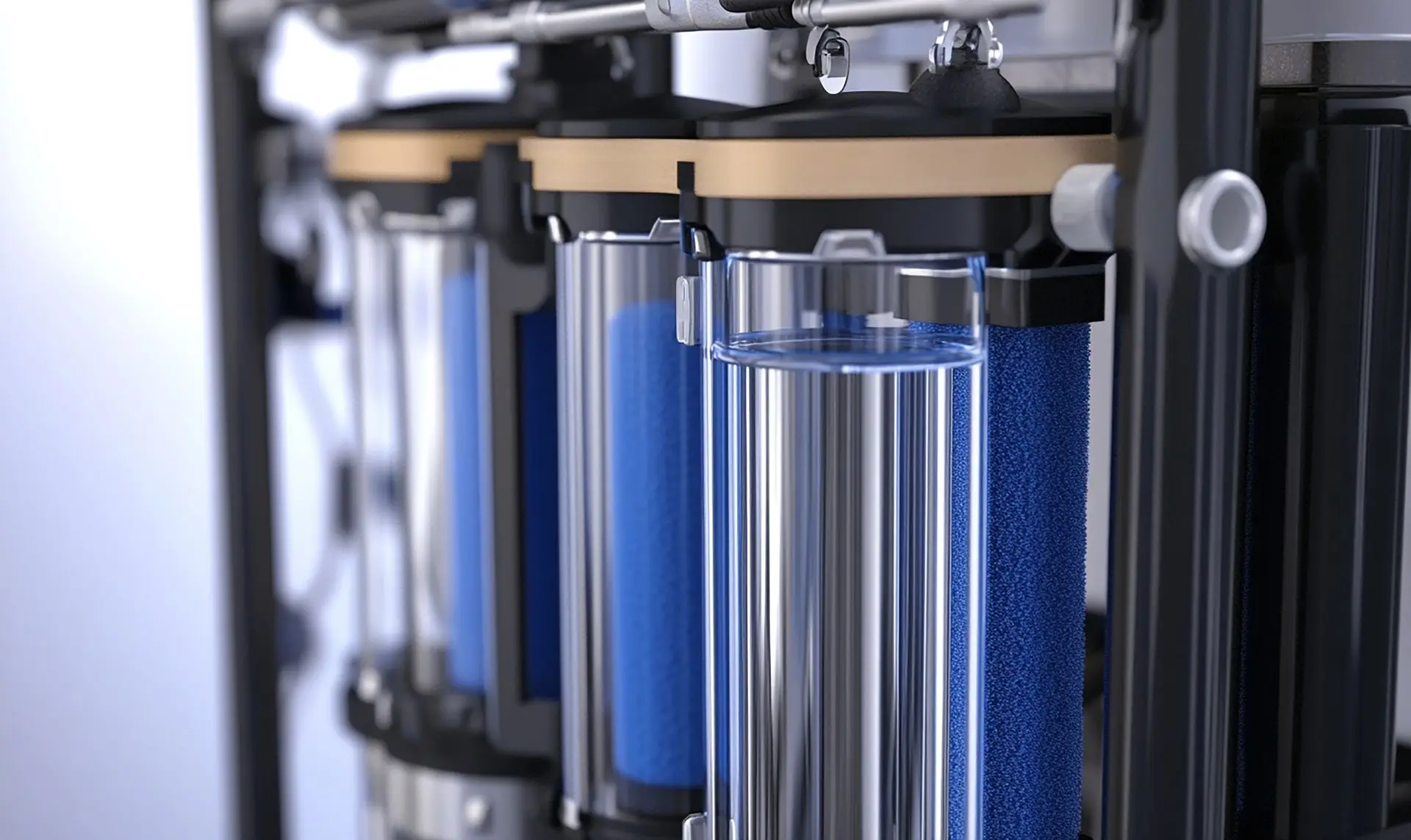
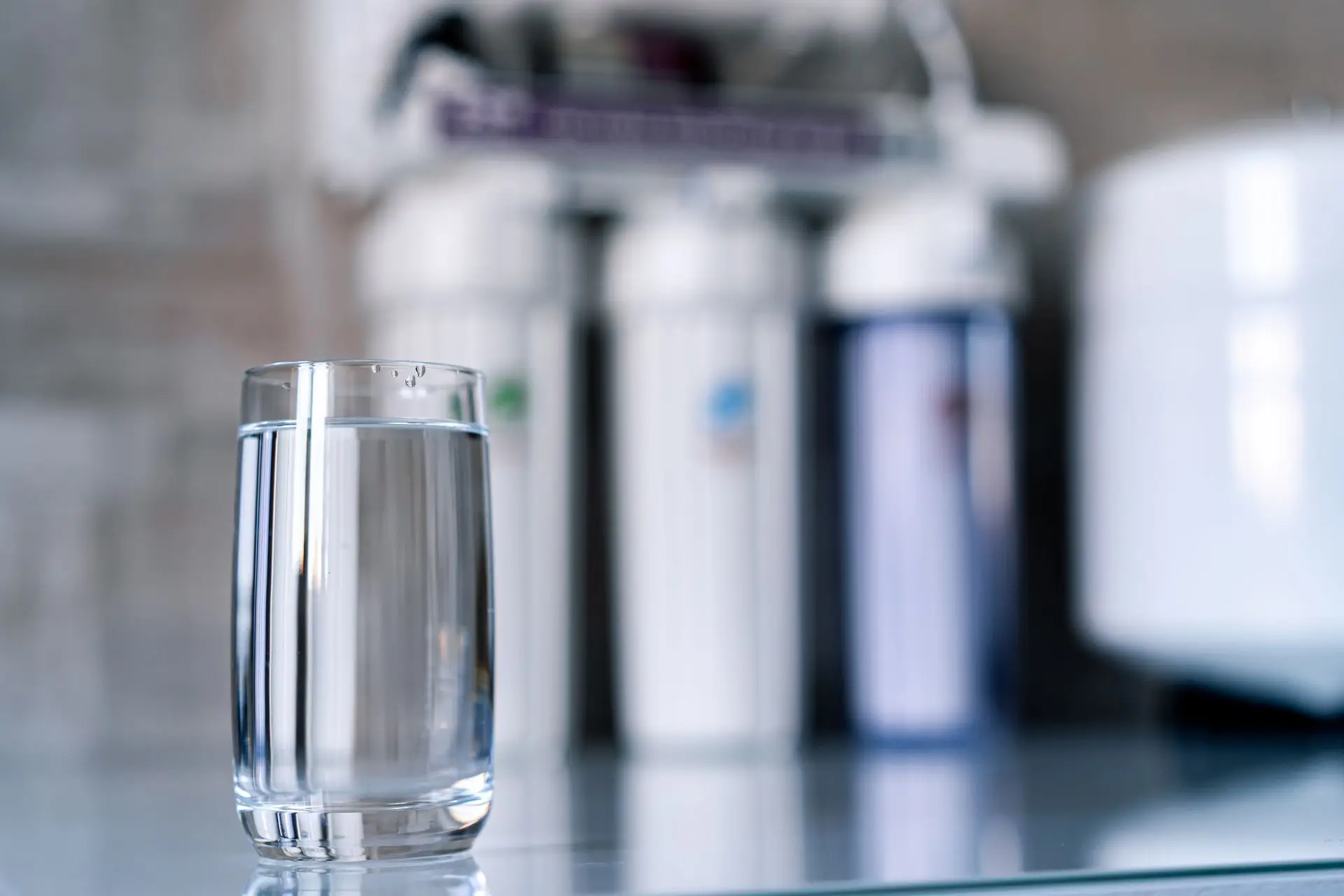
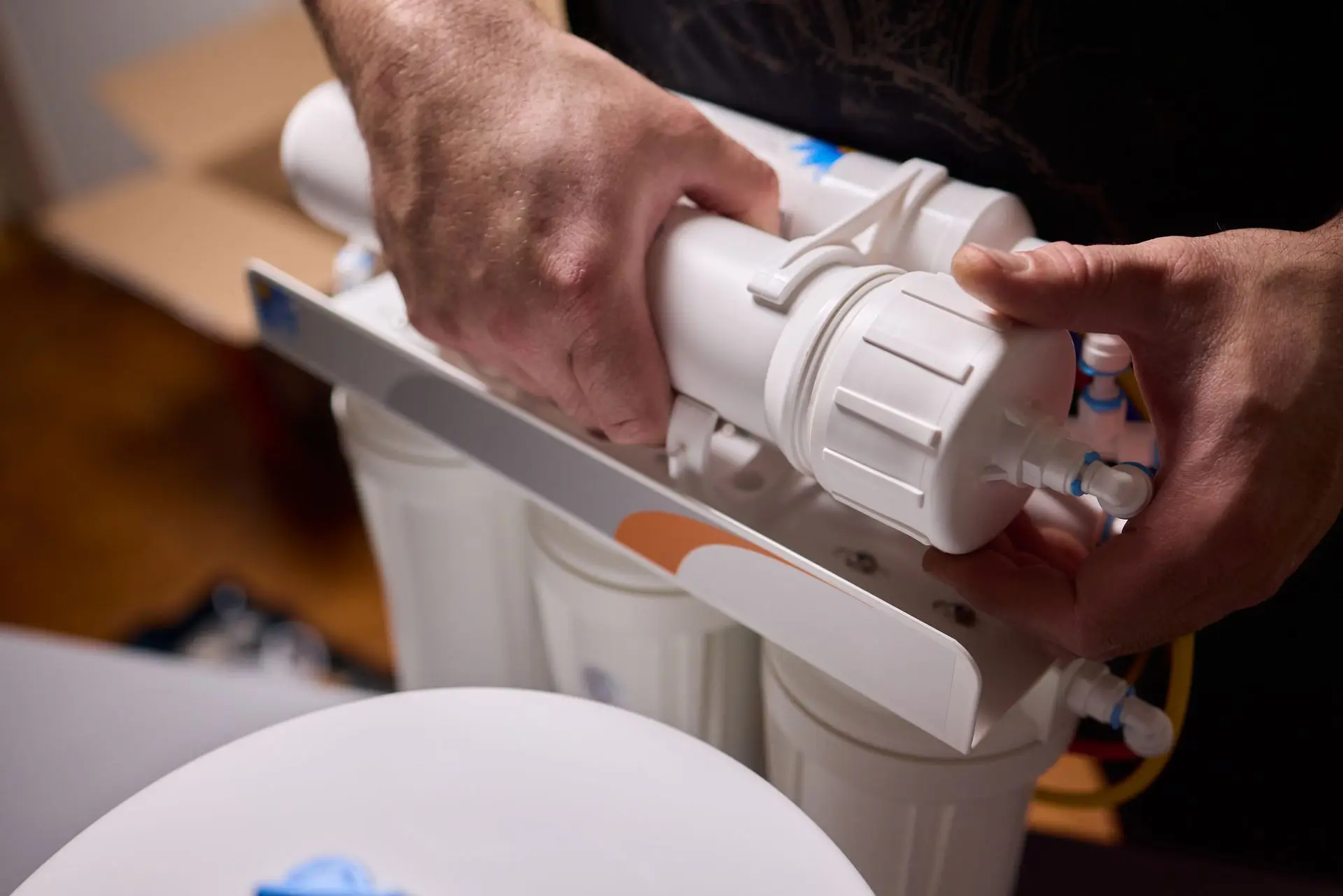
An under-sink water filter connects to the cold-water supply inside the kitchen cabinet. Mains pressure pushes water through one or more cartridge housings, and the filtered water comes out of its own tap at the sink. The housings are far larger than a jug cartridge, so they hold much more filter media and go much longer between changes.
A typical household unit works in stages, just as larger systems do. A sediment cartridge catches sand, rust and silt first. A carbon cartridge follows, often a carbon block, which reduces chlorine, taste and odour and, depending on the model, a range of other chemicals. Our guide to how water filtration systems work explains why that order matters and what each stage removes.
Where dissolved salts, nitrate or a high TDS (total dissolved solids) reading is the concern, the under-sink option steps up to reverse osmosis. An RO membrane removes dissolved solids that carbon cannot, but it needs a drain connection, more cabinet space and usually a storage tank, so it is a choice to make after a water test rather than by default.
The trade-off is installation. An under-sink filter needs a cold-water connection, room in the cabinet for the housings and a way to reach them at changeover time. It usually needs a hole in the sink or worktop for the tap too, unless the existing mixer is replaced with a three-way model.
Where a filter tap fits in
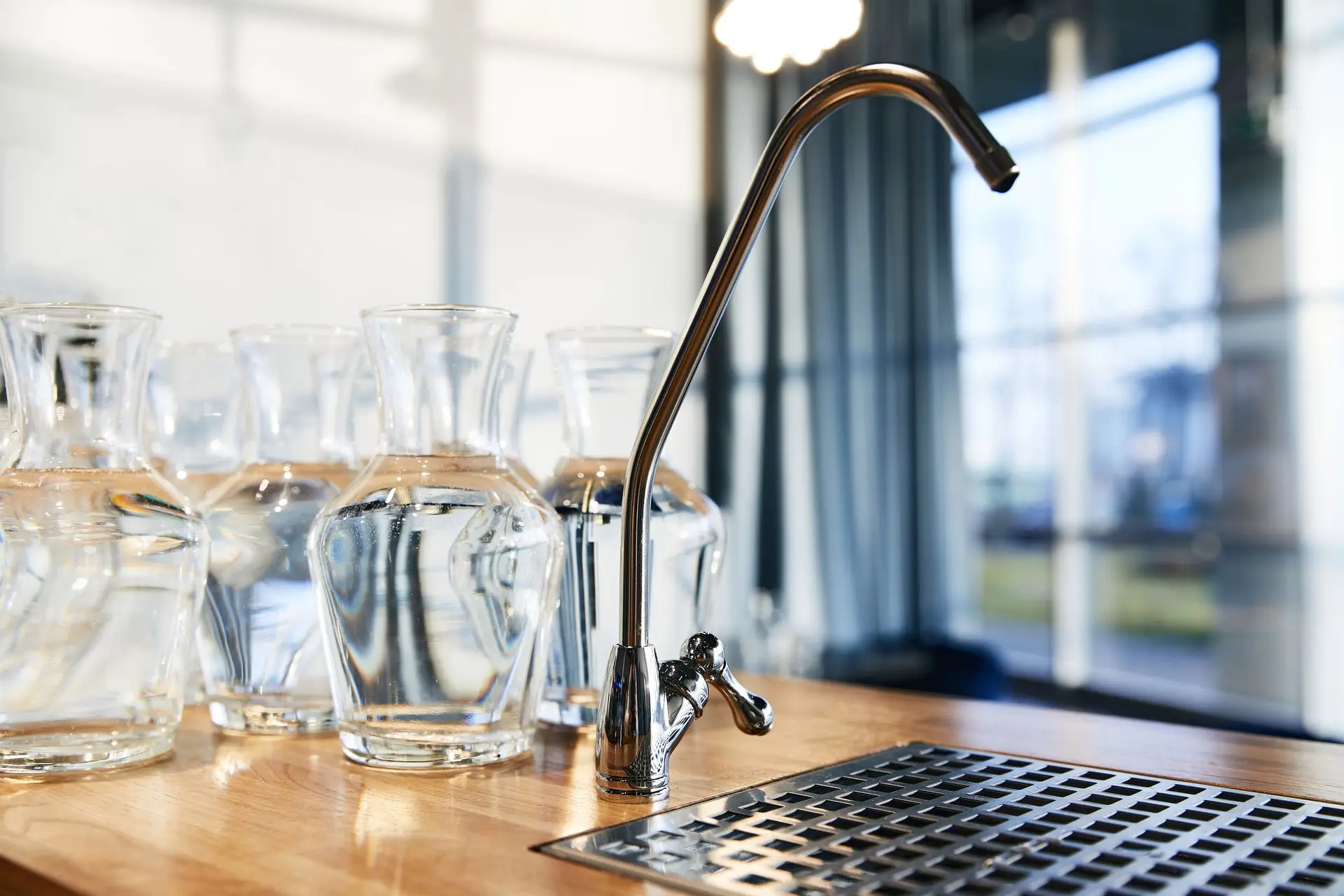
A filter tap is the outlet, not the filter. It delivers the water from an under-sink or RO system, so the quality you get depends on the cartridges behind it. There are two main styles of water filter taps:
- A dedicated drinking-water tap. A small, separate tap beside your normal mixer. It needs its own hole, but the main mixer is left alone.
- A three-way mixer. One tap that replaces your existing mixer and delivers hot, cold and filtered water from the same spout, through separate internal channels so filtered water does not mix with unfiltered water. It suits a renovation, or a sink with no room for a second tap.
You will also see small filters that clip onto the end of an ordinary tap. These sit between a jug and an under-sink system: there is no plumbing, but the cartridge is small, so it needs frequent changes, and not every tap spout will take one.
Jug vs under-sink filter vs filter tap at a glance
| Water filter jug | Under-sink filter with dedicated tap | Under-sink filter with three-way mixer | |
|---|---|---|---|
| Installation | None | Cold-water connection and usually a tap hole | Replaces the existing kitchen mixer |
| How you get filtered water | Fill, wait, pour | On demand from a separate tap | On demand from the main spout |
| Typical filter stages | One small carbon and resin cartridge | Sediment and carbon, with RO as an option | Sediment and carbon, with RO as an option |
| Cartridge changes | About monthly, or sooner with heavy use | Per the cartridge rating, usually months apart | Per the cartridge rating, usually months apart |
| Reduces kettle scale | Yes, if the cartridge contains ion exchange resin | Not with standard sediment and carbon cartridges | Not with standard sediment and carbon cartridges |
| Best for | Renters, small households, trying filtered water out | Families who cook with filtered water | Renovations and sinks with no room for a second tap |
Running costs and upkeep
A jug costs the least upfront, but its running cost is easy to underestimate because the cartridge is small. Take a household that uses about 10 litres of filtered water a day for drinking, the kettle and cooking. At that rate, a 150-litre cartridge lasts about 15 days, so the household needs two cartridges a month rather than one. A jug also holds only a litre or two of filtered water at a time, so someone has to keep refilling it and waiting for it to run through.
An under-sink filter costs more to buy and install, but its cartridges are rated for far more water. Follow the manufacturer's rating in litres or months, whichever comes first. For many household sediment and carbon cartridges, that means a change somewhere between every few months and once a year, depending on how much water you use and how dirty the supply is. The more filtered water a household uses, the more the cost per litre favours a plumbed system. For indicative equipment prices, see our guide to water filter installation costs in South Africa.
Whichever you choose, an overdue cartridge quietly undoes the benefit. Keep a note of the date each cartridge went in, and use the correct replacement water filter cartridges for your housing size and micron rating.
Which one should you choose?
Renting, on a tight budget or just trying it out
A jug is the sensible start. It needs no plumbing, it moves house with you and it will tell you quickly whether filtered water makes a difference to your household.
A family that cooks and fills the kettle with filtered water
An under-sink filter with a dedicated tap usually wins. Filtered water is always available, nobody has to refill anything and cartridge changes drop from monthly to a few times a year.
Hard water and a scaled-up kettle
A jug cartridge with ion exchange resin helps with the kettle, but standard sediment and carbon cartridges do not soften water. If scale is damaging the geyser, shower heads and appliances, the answer is whole-house treatment such as a water softener, not a drinking-water filter.
Borehole, wellpoint or rainwater
None of these three options is enough on its own. Untreated water needs a laboratory test and a properly staged system, with UV disinfection as the last stage where the water will be used for drinking. Inside the City of Cape Town, check with the City first before using borehole, wellpoint or rainwater for drinking, cooking or washing; elsewhere, check your municipality's by-laws.
Not sure what is in your water
Start with what your municipality reports. Our guide to whether tap water is safe to drink in South Africa covers SANS 241, the national drinking-water standard, and the latest Blue Drop results. Where municipal water meets that standard, a filter is mainly about taste, smell and scale rather than making unsafe water safe.
Frequently asked questions
Is it worth getting a water filter jug?
Yes, if your tap water is safe to drink and your main complaints are chlorine taste, smell or kettle scale. A jug is cheap to start with and needs no plumbing. It becomes less worthwhile for large households, because the small cartridge needs changing often and the jug needs constant refilling.
How long does a filter last in a water jug?
Brita recommends replacing its MAXTRA PRO cartridge at least every four weeks or after 150 litres, whichever comes first. Other brands set their own limits, so check the packaging. Heavy users may need to change cartridges more often than once a month.
Does a water filter jug remove bacteria?
No. Jug filters are designed for water that is already safe to drink, and they do not disinfect. Because they remove chlorine, filtered water should be kept in the fridge and used within a day. Water that may contain bacteria needs proper treatment, such as UV after suitable pre-filtration.
Does an under-sink filter reduce water pressure?
With a dedicated filter tap, the filter sits on a separate line, so your main kitchen tap is unaffected. Flow from the filter tap is lower than from a normal mixer, and it drops further as cartridges clog. Correctly sized housings and timely cartridge changes keep it steady.
If an under-sink filter or a filter tap sounds right for your kitchen, send us your water source, your area and a photo of the cabinet under your sink. We will suggest the setup that fits, from a simple carbon unit to a broader home water filtration system, and you can request a quote here.