
Water Filtration Systems
Reverse Osmosis Water Filters
Reverse osmosis is for drinking water where dissolved solids, taste or confidence are the central concern.
How we approach reverse osmosis water filters
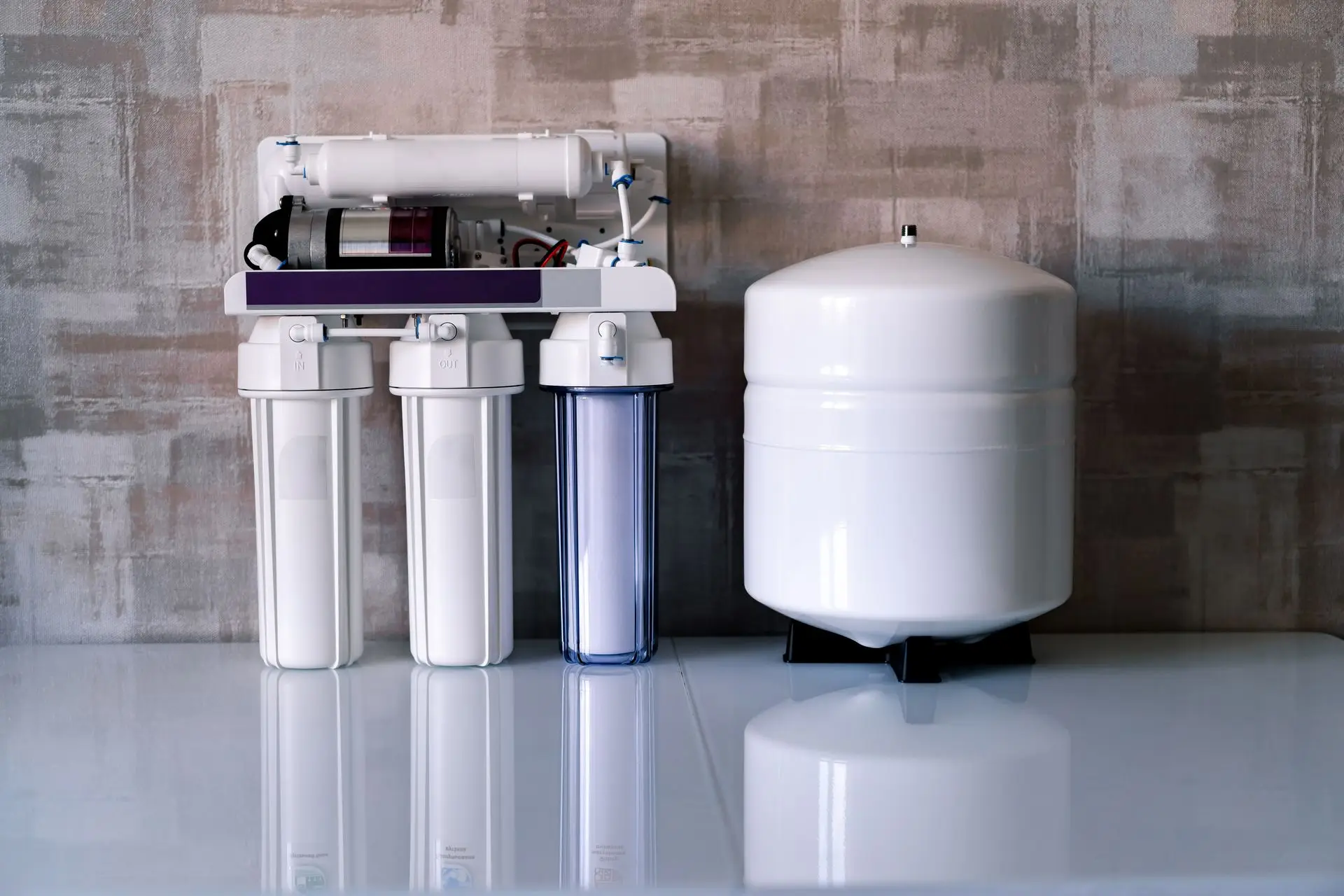
Reverse osmosis pushes water through a membrane fine enough to remove most dissolved solids, including salts, nitrates, fluoride and many heavy metals, which ordinary carbon and sediment filters cannot touch. It is usually installed under the kitchen sink with its own drinking-water tap, supplying a small storage tank.
An RO system needs good mains pressure and sends some water to drain as it works, so we check pressure, drain access and cabinet space first. Sediment and carbon pre-filters protect the membrane, and a remineralising stage can be added if you prefer the taste of water with some minerals put back.
What the specification covers
What we check before fitting reverse osmosis.
Dissolved solids
RO targets salts, nitrates and metals that carbon filters let through.
Pressure and drainage
Mains pressure, a drain point and cabinet space are checked before installation.
Membrane care
Pre-filters are changed on schedule so the membrane lasts.
FAQs
Questions before we quote
Does reverse osmosis waste water?
Some water goes to drain to carry away what the membrane removes. The amount depends on the water pressure and the system, and good pressure with a well-maintained membrane keeps it down.
Does RO remove minerals I need?
It removes most minerals along with the contaminants. Most of the minerals we need come from food rather than water, and a remineralisation cartridge can add calcium and magnesium back for taste.
How often do RO filters need replacing?
Pre-filters are typically changed every six to twelve months and the membrane every two to three years, depending on water quality and how much water you use.
Related guides
Background reading before you choose a system.
Reverse Osmosis vs UV: Which Water Filter Do You Need?
Reverse osmosis vs UV explained: what each removes, what each needs to work, whether RO water is healthy, and which suits municipal, borehole or rainwater.
Read Guide
How Water Filtration Systems Work: A Plain-English Guide
How water filtration systems work, stage by stage: what sediment, carbon, softeners, reverse osmosis and UV each remove, and why the order matters.
Read Guide
Is Tap Water Safe to Drink in South Africa? (Cape Town Included)
Can you drink tap water in Cape Town? What SANS 241 and the latest Blue Drop results show for South Africa, why quality varies and when a filter helps.
Read GuideOther water filtration systems
Home Water Filtration
Whole-house filtration improves water before it reaches showers, kitchens, laundry points and appliances.
Learn MoreBorehole Water Filtration
Borehole water is site-specific. We test before specifying so iron, manganese, sediment and bacteria are handled in the right order.
Learn MoreCommercial Water Filtration
Consistent water for restaurants, cafés, offices and guest accommodation, with scale protection for equipment and filter changes planned around trading hours.
Learn MoreIndustrial Water Filtration
Process water filtration designed around flow rate, pressure and downtime, from boiler and cooling pre-treatment to wash and process water.
Learn MoreCustom Water Filtration
Systems built stage by stage for farms, lodges and properties that mix municipal water, a borehole and rainwater, designed around the test results and plumbing.
Learn More
Want reverse osmosis drinking water?
Tell us your water source, cabinet space and how much drinking water you use. We will size the system and the tap.