To purify water at home, bring it to a rolling boil for one minute and let it cool, or disinfect clear water with plain, unperfumed household bleach: one 5 mL teaspoon per 20 to 25 litres, left to stand for at least two hours. Both kill germs, but neither removes chemicals, salts or metals. For everyday drinking water, the lasting answer is treatment matched to a water test: a filter for particles and taste, with UV or reverse osmosis where germs or dissolved salts are the problem.
Which method you need depends on where your water comes from and what is wrong with it. A boil-water notice on municipal supply, a borehole with a failed bacteria test and a rainwater tank after a dusty summer all call for different answers. This guide covers the emergency methods first, then the permanent ones, and ends with a table matching each method to each water source.
Filtering, disinfecting and purifying: what each one does
The words get used loosely, so it helps to pin them down before choosing a method.
- Filtering removes things physically or by adsorption: sand, rust, sediment, chlorine taste and some chemicals. Most filters do not make unsafe water safe from germs.
- Disinfecting kills or inactivates bacteria, viruses and parasites. Boiling, chlorine and UV light disinfect. They leave dissolved chemicals where they are.
- Purifying is the everyday word for making water safe to drink. In practice that usually means disinfection, sometimes combined with filtration or reverse osmosis to deal with chemicals too.
Our guide to how water filtration systems work goes deeper into each filter type and the difference between a filter and a purifier. The short version: if germs are the worry, you need a disinfection step, and if chemicals or salts are the worry, you need the right filter or membrane.
Method 1: Boil it
Boiling is the most reliable emergency method because it does not depend on getting a dose right. The World Health Organization notes that a rolling boil is enough to inactivate disease-causing bacteria, viruses and protozoa. That includes Cryptosporidium, a parasite that household chlorine doses do not reliably kill.
- If the water is cloudy, let it settle and pour the clear water off, or strain it through a clean cloth.
- Bring it to a full, rolling boil and keep it there for one minute. City of Cape Town boil-water notices and the US CDC both give one minute.
- Let it cool naturally.
- Store it in clean, covered containers.
What boiling does not do matters just as much. It does not remove heavy metals, salts or most other chemicals, and it does not remove nitrate, which some boreholes carry. If a water test shows a chemical problem, boiling will not fix it.
Method 2: Household bleach
When boiling is impractical, for example during a power cut or when you need a lot of water, plain household bleach is the next option. South African household bleach is typically 3.5% sodium hypochlorite, so check the label for the strength.
- Dose: City of Cape Town notices advise one teaspoon (5 mL) of unperfumed household bleach per 20 to 25 litres of water.
- Mix and wait: stir or shake it well, cover the container and let it stand for at least two hours before drinking. Some notices give a shorter time, but two hours is the safer figure.
- Use the right product: only plain, unperfumed household bleach, as the notices specify. Multipurpose bleach cleaners can be weaker (one common product is 2.2%), so the dose above will not work as written.
- Ignore foreign drop charts: American guides quote drops per gallon of 6% or 8.25% bleach, which is stronger than a typical South African bottle.
Bleach has two blind spots. Cloudy water contains material that uses up chlorine, so settle or strain it first, and boil it instead if it stays murky. And chlorine at household doses does not reliably kill Cryptosporidium, which is why boiling remains the first choice when there is a known contamination event. Tank-sized doses are a different calculation, covered in our guide on how to clean a water tank.
Method 3: Purification tablets and solar disinfection
Water purification tablets are a sensible item for a hiking bag or an emergency kit. Follow the pack directions exactly, because the dose and waiting time differ between products. The active ingredient matters:
- Chlorine dioxide tablets kill waterborne germs, including Cryptosporidium, at practical doses and contact times, according to the CDC.
- Chlorine tablets work much like bleach, with the same weakness against Cryptosporidium and cloudy water.
- Iodine tablets are for short-term use only. The CDC advises that people with unstable thyroid disease or an iodine allergy should not use them, that pregnant women should not use them for long periods, and notes WHO advice to limit iodine-treated water to a few weeks.
Solar disinfection (often called SODIS) is a last resort when you have nothing else. Fill clear plastic drinks bottles, lay them on their side in full sun for at least six hours and shake them now and then. Under cloudy skies the CDC says to leave them for two consecutive days.
Method 4: Filters for everyday water
Filters are what most homes rely on day to day, but each type does a specific job, and it is worth knowing which one you have.
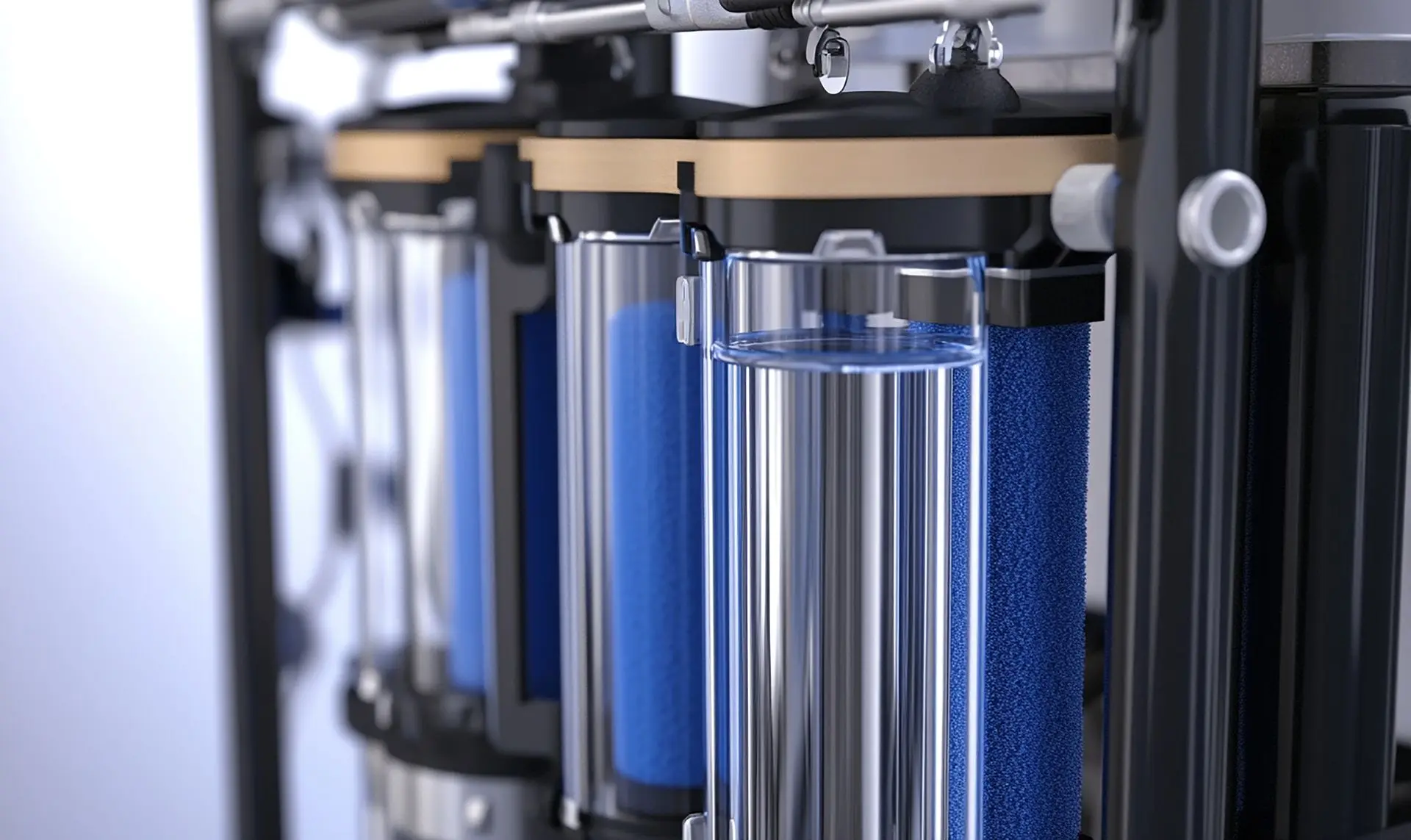
- Activated carbon removes chlorine taste and smell and some organic chemicals. It does not remove bacteria, and a carbon cartridge left too long can become a place where bacteria grow.
- Ceramic filters have pores as small as 0.2 microns. They remove bacteria and protozoa but only some viruses.
- Sediment filters catch sand, silt and rust. They protect the stages after them rather than making water safe on their own.
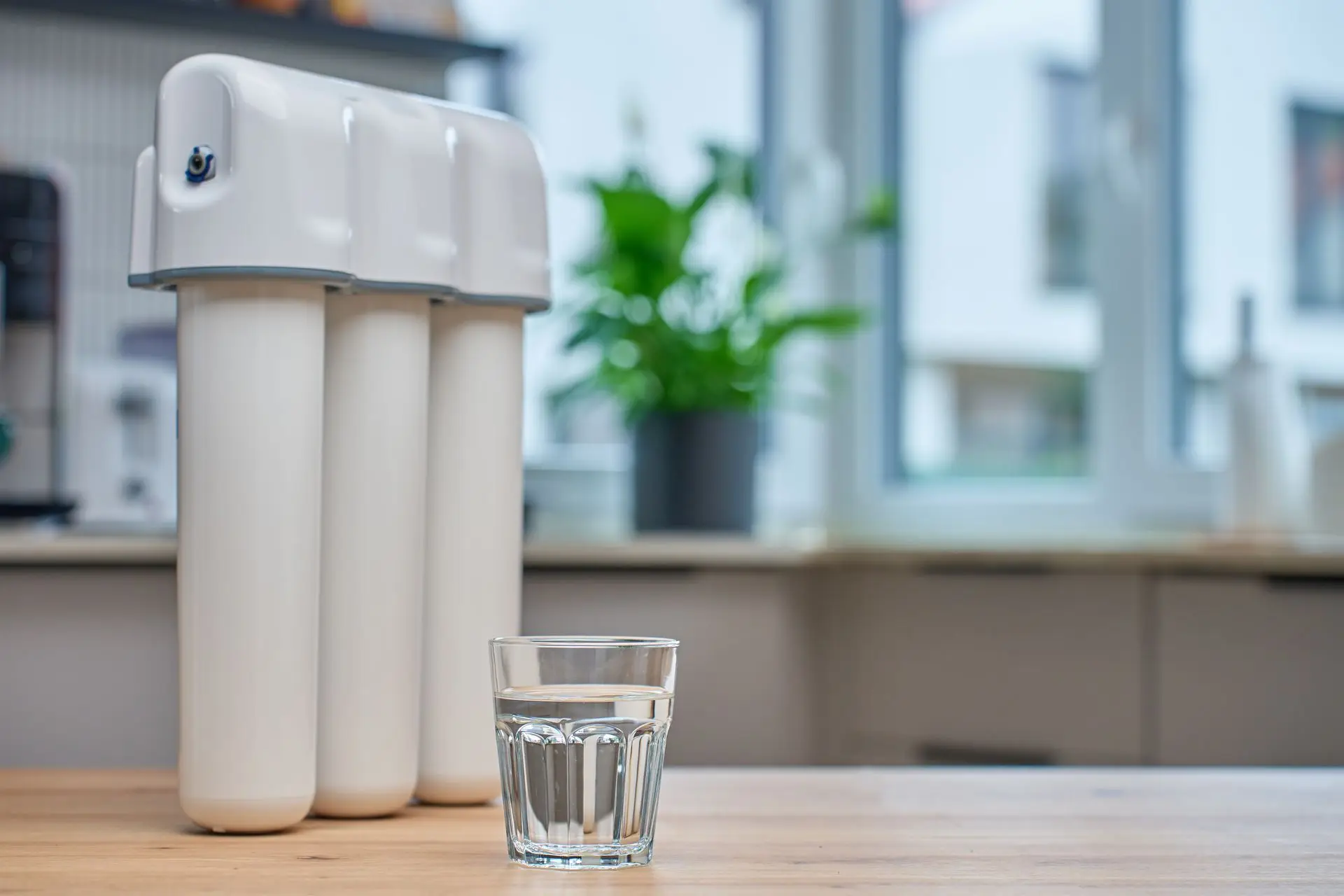
On municipal water that already meets the national standard, a carbon filter is a taste upgrade, not a purifier, and that is usually all a home on mains supply needs. An under-sink water filter with a carbon block does this neatly at the kitchen tap. The key is changing cartridges on time, because an overdue cartridge can make water worse rather than better.
Method 5: UV and reverse osmosis
When you need purified water every day, not just in an emergency, the job moves from the kettle to plumbed-in treatment. Two technologies do the heavy lifting.
UV disinfection
A UV water filter passes water past an ultraviolet lamp that inactivates bacteria, viruses, Giardia and Cryptosporidium without adding chemicals. It needs clear water to work: manufacturers typically ask for turbidity below 1 NTU, iron below 0.3 mg/L, manganese below 0.05 mg/L and hardness below about 120 mg/L, which is why a sediment filter usually goes in front of it. UV leaves no disinfectant in the water afterwards, so pipes and storage after the lamp need to stay clean. For whole-home units, look for NSF/ANSI 55 Class A, which requires a UV dose of 40 mJ/cm².
Reverse osmosis
Reverse osmosis pushes water through a membrane fine enough to hold back dissolved salts. It removes lead, copper and sodium and can reduce arsenic, fluoride and nitrate, which makes it the only method in this guide that removes dissolved salts and nitrate. Certified units nonetheless carry a warning not to use them on microbiologically unsafe water without disinfection before or after, so on borehole or tank water RO is usually paired with UV.
Which purification method suits your water?
| Water source | Usual concern | Short-term fix | Lasting solution |
|---|---|---|---|
| Municipal tap, normal supply | Chlorine taste, occasional earthy taste | None needed | Carbon filter for taste |
| Municipal tap under a boil-water notice | Germs after a burst main or contamination | Boil, or bleach as the notice says | Follow the notice until it is lifted |
| Borehole or wellpoint | Bacteria, iron, manganese, nitrate or salts, depending on the test | Boil (germs only) | Test first, then sediment, iron removal, carbon and UV; RO for nitrate or salts |
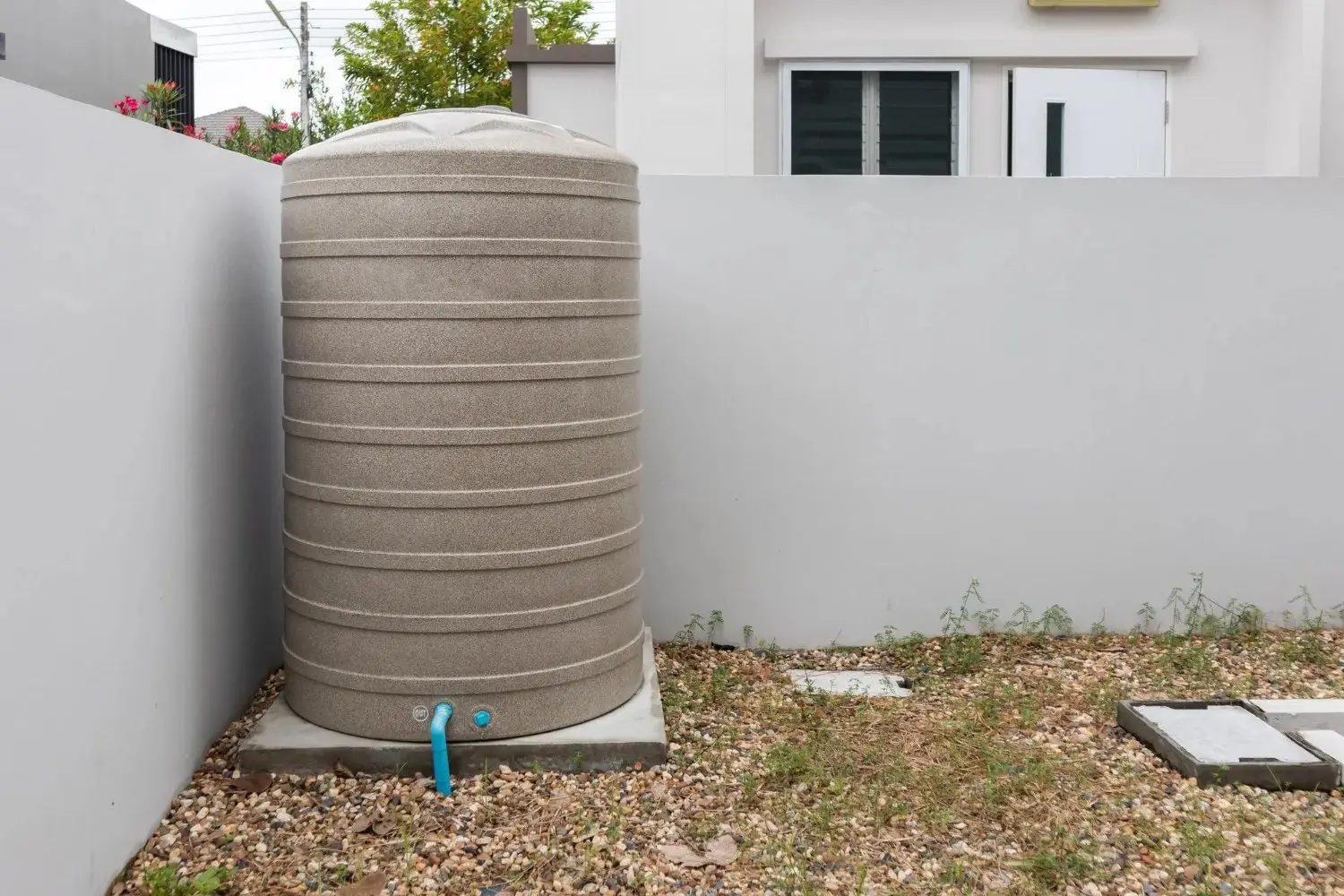
| Rainwater or storage tank | Bacteria from the roof or tank, sediment | Boil | Clean tank, sediment and carbon filters, then UV |
For borehole and tank water, start with a laboratory test rather than guessing. A test against SANS 241, the South African drinking water standard, shows whether the issue is germs, chemicals or both. If it comes back positive for bacteria, our guide to E. coli and coliforms in water explains what the result means. That is also how we work on borehole water filtration jobs: test first, then build in order, with sediment first, iron and manganese removal if needed, carbon for taste and UV as the final stage for drinking water.
Inside the City of Cape Town, borehole, wellpoint and rainwater may not be used for drinking, cooking or body washing without the City's approval, so check with the City before relying on treated alternative water for those uses. Elsewhere, check your municipality's by-laws.
Frequently asked questions
Is boiled water the same as purified water?
Boiled water is disinfected: a rolling boil kills the bacteria, viruses and parasites that cause waterborne illness. It is not free of chemicals, though, because boiling leaves metals, salts and nitrate in the water. For water with a chemical problem, you need a filter or reverse osmosis chosen from a test result.
How much bleach do I need to purify 25 litres of water?
City of Cape Town guidance is one teaspoon (5 mL) of plain, unperfumed household bleach for 20 to 25 litres of clear water. Mix it well, cover it and let it stand for at least two hours. If the water is cloudy, boil it instead.
What is the difference between a water filter and a water purifier?
A filter removes particles, taste and some chemicals, but many filters do nothing about germs. A purifier, in the strict sense, also deals with bacteria, viruses and parasites, usually with UV, a fine membrane or a chemical disinfectant. A countertop jug or carbon cartridge is a filter; a properly pre-filtered system that ends in a UV stage is a purifier.
How long can purified water be stored?
Store treated water in clean, covered containers. The CDC suggests replacing water you have stored yourself about every six months.
If you would rather have safe water from the tap than boil it, tell us your water source, property type and area. We will suggest testing where it is needed and a system sized to your supply, from a single kitchen unit to whole-home water filtration. Request a quote to get started.