Sometimes, but you can't tell by looking at it. Borehole water is untreated, and the biggest risks, such as bacteria from septic tanks or livestock and nitrates from fertiliser or sewage, have no colour, smell or taste. Only a laboratory test against SANS 241, the South African drinking water standard, can tell you whether yours is safe to drink.
Until you have a clean result, treat the water as unsafe to drink without boiling it. This guide covers what can turn up in borehole water in South Africa, how to test it, how to read the results and what to do in the meantime.
Why clear borehole water isn't proof that it's safe
Municipal water is treated, and the municipality is responsible for testing it against SANS 241 (our guide to water quality in South Africa explains how). Borehole water skips all of that. Its quality depends on the local geology and on what is happening on the surface around the borehole.
The contaminants that matter most for health are the ones you can't detect yourself. E. coli and nitrate don't change how water looks or tastes, and water carrying dissolved iron can come out crystal clear and only turn orange-brown after standing. That's why WWF South Africa advises Capetonians to assume borehole and wellpoint water needs treatment before drinking.
Quality also changes. Heavy rain, a new septic tank next door, animals kept closer or a cracked seal at the borehole head can all shift the result, so an old test isn't enough.
What can be in borehole water in South Africa
Every borehole is different, but these are the main things a borehole water quality test looks for.
Bacteria: E. coli and coliforms
E. coli lives in the gut of humans and animals, so finding it means faecal matter has reached the water, usually from leaking septic tanks, French drains, pit latrines, sewer lines, kraals or animals near the borehole. SANS 241 requires it to be undetectable in a 100 mL sample, because it signals that the germs behind stomach illness could be present. Total coliforms are a wider group that don't necessarily come from sewage, but they warn that something is getting in, often through a shallow wellpoint or a poorly sealed borehole.
Nitrates
Nitrate comes from septic systems, pit latrines, fertiliser and animal waste. High levels can cause methaemoglobinaemia (blue baby syndrome), which reduces the blood's ability to carry oxygen, and bottle-fed infants under six months are the most vulnerable. The WHO guideline is 50 mg/L as nitrate, which labs often report as 11 mg/L "as N", the figure used in SANS 241. High nitrate is a known groundwater problem from the Northern Cape through North West into Limpopo, but any borehole near septic tanks or farming can be affected.
Fluoride
Some groundwater is naturally high in fluoride, particularly in parts of North West, Limpopo and the Northern Cape. Above 1.5 mg/L, long-term drinking can mottle and weaken teeth, and higher levels can damage bones. It only shows up on a test.
Iron and manganese in borehole water
Iron in borehole water is a familiar problem around Cape Town, where the City notes that groundwater often has a high metal content. It stains basins, toilets, paving and laundry orange-brown, while manganese leaves black stains. Iron is mainly a nuisance rather than a health risk, though it clogs filters and feeds slimy iron bacteria. Manganese is mostly flagged for staining too, but the WHO now has a provisional health-based guideline for it, aimed at protecting bottle-fed babies.
Hardness
Hard water carries dissolved calcium and magnesium. Neither SANS 241 nor the WHO sets a health limit for it, but it leaves scale in kettles, geysers and shower heads. Where it's high, a water softener is the usual answer.
Turbidity
Turbidity is cloudiness from fine silt, clay or organic matter. Particles can shield bacteria from disinfection, which is why UV only works on clear water, and water that clouds up after rain may mean surface water is getting in.
Salinity and dissolved solids
In parts of the Karoo and some coastal areas of the Western Cape, groundwater can be brackish or salty. High total dissolved solids (TDS) make water taste salty or bitter and leave scale in pipes and geysers, and ordinary sediment and carbon filters don't remove them.
How borehole water testing works
Use a laboratory, ideally one accredited by SANAS (the South African National Accreditation System), that reports your results against SANS 241. For drinking water, the test needs two halves:
- Microbiological: E. coli and total coliforms, often with a general bacteria count. This shows whether sewage or animal waste is reaching the water.
- Chemical and physical: nitrate, nitrite, fluoride, iron, manganese, hardness, turbidity, pH and TDS, usually with a wider metals scan. This covers long-term health risks and what the water will do to your plumbing.
For a first test, pay for the full SANS 241 analysis rather than a basic bacteria check, because any treatment system should be designed around it.
How to take a sample properly
A careless sample can show bacteria that aren't in the borehole. Your lab's instructions will usually run like this:
- Use the lab's bottles. The bacteria bottle is sterile and may contain a few drops of chemical, so don't rinse it.
- Sample from a tap at or near the pump outlet, before any filters, softeners or storage tanks, with hoses removed.
- Clean the tap outlet as the lab instructs, for example with alcohol or diluted bleach.
- Run the borehole for 5 to 10 minutes so you sample fresh groundwater, not water that has stood in the pipes.
- Don't touch the inside of the lid or the bottle neck. Fill to the level the lab asks for, and fill the bacteria bottle before any chemical one.
- Label it, keep it in a cooler box with ice packs and get it to the lab the same day if you can. Some labs want bacteria samples within six hours, so check their hours first.
How often to retest
If you drink borehole water, test it at least once a year for bacteria, nitrate and general chemistry. Retest after heavy rain or flooding, after work on the borehole or pump, after changes nearby such as a new septic tank or livestock, if the taste, colour or smell changes, when a baby is on the way, and after treatment is installed.
How to read your borehole water results
A lab report lists each parameter with your result and the SANS 241 limit, and flags anything that fails. Limits are grouped by risk: acute health (can make you ill quickly), chronic health (harm over years), aesthetic (taste, colour, staining) and operational (affects treatment and plumbing). An acute failure such as E. coli matters far more than an aesthetic one such as iron. Watch the units, too: nitrate "as N" and "as NO3" give very different numbers for the same water.
| On the report | What it means | What usually deals with it |
|---|---|---|
| E. coli detected | Faecal contamination, not safe untreated | Fix the source, then UV as the final stage |
| Total coliforms, no E. coli | Something is getting in | Check the borehole seal, disinfect, retest |
| Nitrate above the limit | Risk to babies; boiling won't help | Reverse osmosis for drinking water |
| Fluoride above 1.5 mg/L | Long-term risk to teeth and bones | Reverse osmosis for drinking water |
| Iron or manganese above the limit | Staining, metallic taste, clogged filters | An oxidation or iron-removal stage |
| High TDS | Salty taste and scaling | Reverse osmosis at the drinking tap |
If something fails, get the result explained or confirmed, then build the treatment around the full report rather than buying the first filter you see.
What to do while you wait for results
- Boil water for drinking, cooking and brushing teeth. The WHO says a rolling boil is enough to kill bacteria, viruses and parasites.
- Don't rely on boiling for chemicals. It does nothing for nitrate, fluoride or salts and slightly concentrates them as water evaporates.
- Use bottled or municipal water for baby formula until you have your bacteria and nitrate results.
- Watch for changes in colour, cloudiness or smell. If anyone develops a stomach upset, stop drinking the water and speak to a doctor.
Borehole water purification options at a glance
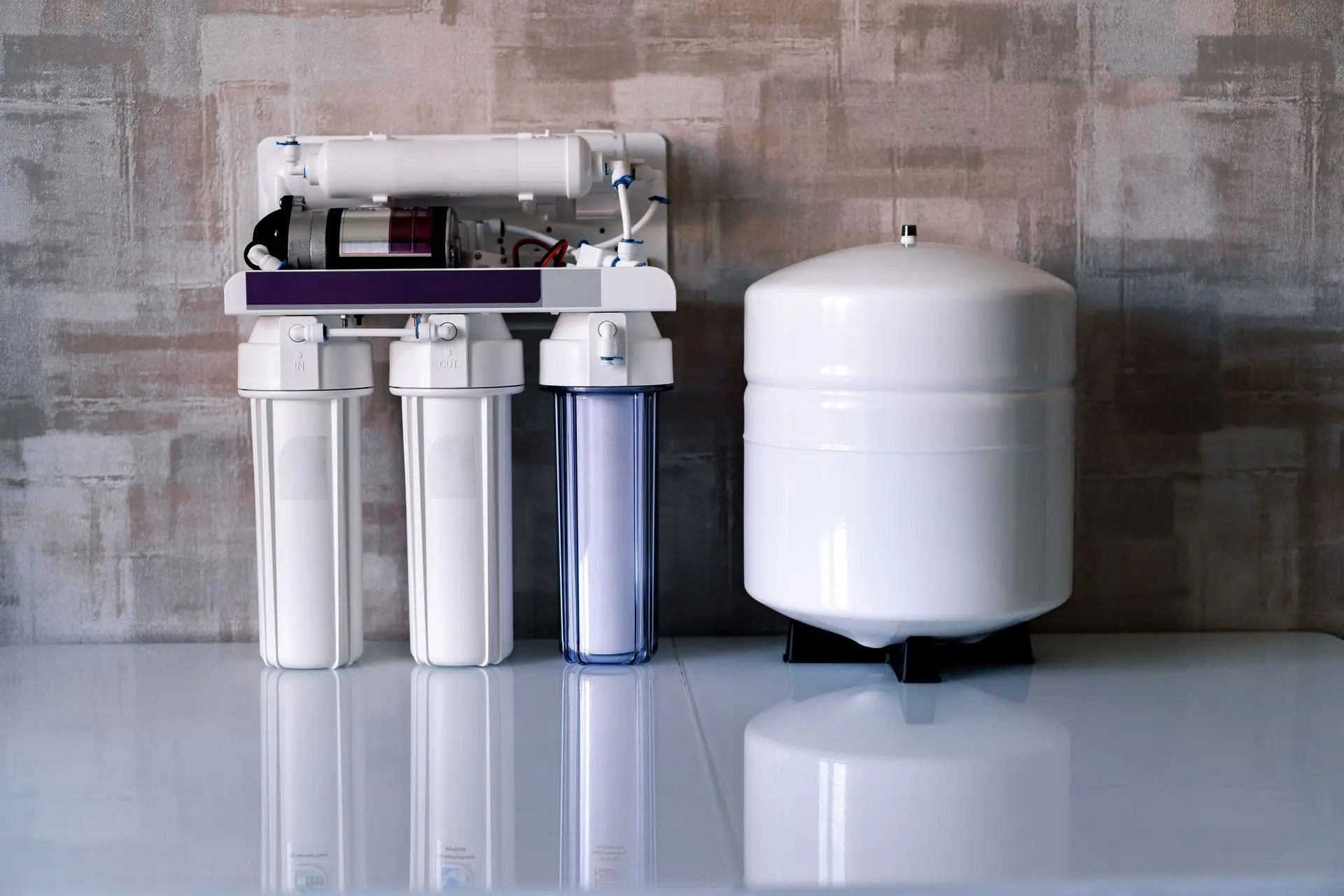
How to purify borehole water depends entirely on your results. A drinking-water system is built in stages, each with a specific job:
- Sediment filtration removes sand and silt and protects everything after it.
- Iron and manganese removal oxidises dissolved metals so they can be filtered out.
- Activated carbon improves taste and odour.
- UV disinfection inactivates bacteria and viruses without chemicals and is the usual final stage for drinking water. It needs clear water and power, and does nothing for nitrate, iron or salts.
- Reverse osmosis at the kitchen tap removes most dissolved solids, including nitrate, fluoride and salts.
Not every borehole needs every stage. Our borehole water treatment guide covers how a system is put together and maintained, and our comparison of reverse osmosis vs UV water filters explains why the two solve different problems.
Do you need to register your borehole?
Nationally, Schedule 1 of the National Water Act allows reasonable domestic use of groundwater, including watering a small non-commercial garden, without a water use licence. In July 2026, the Department of Water and Sanitation confirmed that households using a borehole for non-commercial domestic purposes don't need to register it. Commercial, agricultural and other larger-scale users may need a general authorisation or a water use licence.
Municipal rules are separate. The City of Cape Town requires boreholes and wellpoints to be registered with it, wants 14 days' notice before a new one is sunk and issues a sign that must be displayed. Its alternative water guidelines also state that the City's Water By-law does not allow alternative water, including borehole water, to be used for drinking, cooking or body washing, apart from approved arrangements for some large developments and businesses. If you're within the City, check the current position with it before plumbing borehole water to a drinking tap. Elsewhere, check your municipality's by-laws.
Frequently asked questions
Can you drink borehole water without treating it?
Only if a recent SANS 241 test shows it complies and you keep testing it. Quality can change with rain and activity nearby, so a disinfection stage such as UV is a sensible safeguard even when a test passes.
Does boiling borehole water make it safe to drink?
It kills bacteria, viruses and parasites, so it's the right short-term step. It doesn't remove nitrate, fluoride, iron or salts, so it isn't a fix for chemical problems.
Is borehole water safe for babies?
Not until it has been tested for bacteria and nitrate. Bottle-fed babies under six months are the most sensitive to nitrate, which boiling won't remove, so use bottled or municipal water for formula until you have results and speak to a doctor or clinic if you're unsure.
If you'd rather have the testing and the system handled properly, our borehole water filtration service starts with a SANS 241 laboratory test and builds the treatment around the results. Send your water source, property type and area through our quote request page and we'll advise on the next step.